
Published October 25, 2025 · Updated October 18, 2026
Ashiatsu: A Guide to Barefoot Massage
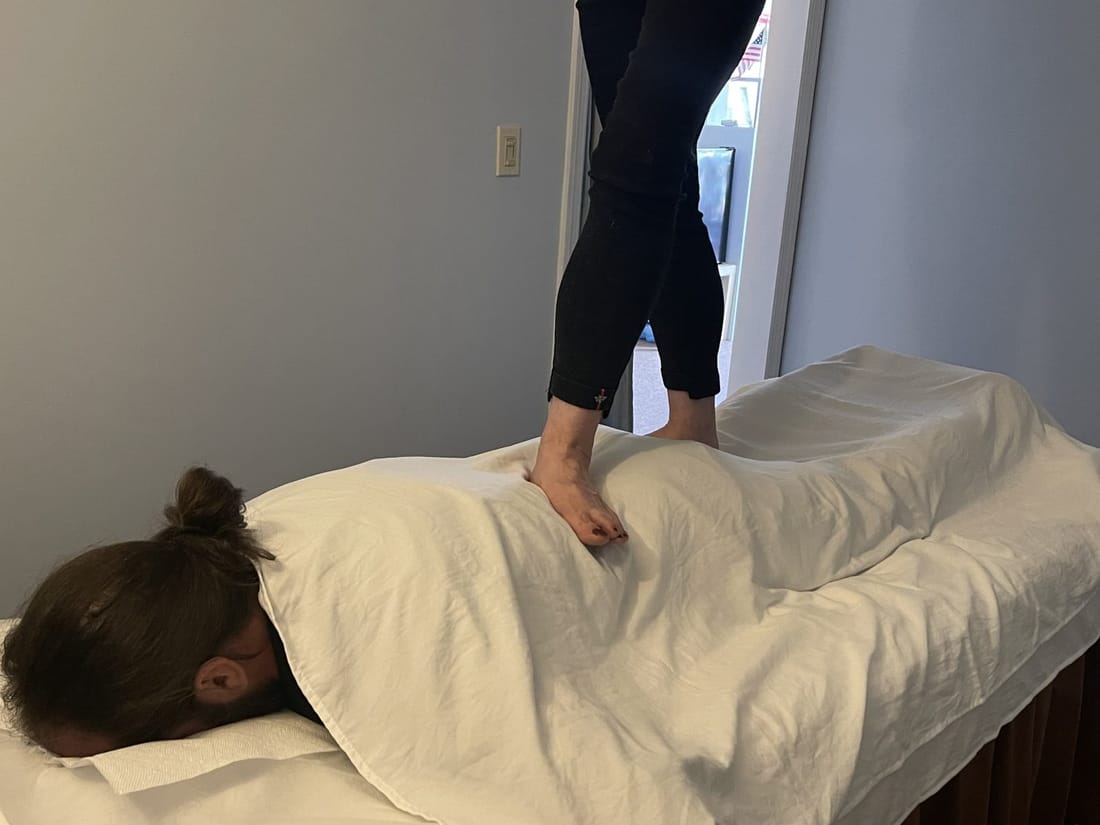
Ashiatsu uses the therapist’s feet to apply broad pressure, with overhead bars providing support and control. It has a different feel from hand-based massage, so ask about the technique before deciding whether to book.
Choosing barefoot work for its feel
The broad contact of a foot is a useful starting point for understanding the style. Think about whether that kind of contact interests you, rather than whether you can tolerate more pressure than on a previous visit. Ask how gliding or focused applications are used in the session being offered.
You can be curious about Ashiatsu and still have questions. Describing a preference for broad, steady contact is more helpful than asking for an intensity comparison with every other massage. The technique is a choice, not a test or a level you have to advance to.
How barefoot massage differs from hand-based work
Ashiatsu uses the therapist’s feet to apply broad pressure, with overhead bars for support and control. Hand-based massage uses a different contact surface. That distinction can change the feel of the session without establishing that barefoot work is deeper, more effective, or appropriate for everyone.
Ask the therapist to describe the movements planned for your appointment. If you have only experienced Swedish or hand-based deep tissue massage, explain what you liked about those visits. The comparison can help you communicate preferences for pace, contact, and pressure rather than choosing by intensity alone.
What a longer appointment can include
A 90-minute reservation provides more time than a 60-minute one. Discuss whether you want that time spread across more areas or spent at a slower pace on the areas already agreed. It does not automatically mean more pressure or a required sequence.
If you would like the included hot stones, confirm how they fit into the session and whether you want them. If you are mainly interested in the barefoot portion, say so. The appointment plan should be understandable before it begins, with room for changes as preferences become clearer.
The table, overhead bars, and setup
Before starting, ask how the table and support bars are used. The therapist should be able to explain the equipment in relation to the session you are considering. You do not need to arrive knowing how a barefoot appointment is arranged.
Discuss positioning, clothing, and draping as part of that conversation. Ask which areas will be included and whether any parts of the proposed session can be left out. Equipment is one part of the technique; your questions and preferences still matter throughout the appointment.
What to expect from the conversation and session
Start with your preferred areas of focus and the amount of pressure you enjoy. Do not assume barefoot massage has to mean maximum body weight or a particular intensity. Ask how the therapist adjusts the application and how you should signal when you want less pressure.
During the appointment, tell the therapist if you want a pause, a different area, or an end to the session. You can also say when a particular pace or pressure feels comfortable. Feedback is useful at the moment it occurs, rather than only after the visit has finished.
Questions about training and service choices
If you want to know more about relevant training, ask specifically about experience with barefoot massage and the studio’s equipment. Ask how the therapist applies and adjusts the technique, as well as which credentials or training they can explain. You can ask these questions before choosing a reservation.
The menu lists Ashiatsu at $60 for 60 minutes and $85 for 90 minutes, with complimentary hot stones. Confirm the inclusions and your temperature preferences when reserving. If you prefer hand-based pressure, compare deep tissue or Swedish rather than treating barefoot work as a required next step.
Tradition, training, and the information that matters now
A history of barefoot bodywork can be interesting, but an old origin story does not establish a result for a current appointment. For a visit to this studio, the relevant questions concern the technique offered, the practitioner’s experience with it, the equipment, and your own preferences.
Ask about those specifics without assuming every therapist has the same background. If a qualification matters to your choice, request the actual credential information. Avoid treating a broad description of training somewhere in the industry as proof of a particular person’s preparation.
Questions to take to the desk
Before reserving, ask whether the requested Ashiatsu length is available, which inclusions apply, what clothing and draping to expect, and how to discuss pressure during the appointment. Mention any setup concern before paying so it can be addressed in the booking conversation.
Someone who would rather receive hand-based massage can choose another style. Compare the menu descriptions instead of assuming there is one ideal option for every guest. If a health concern affects your choice, discuss suitability with your health care provider; the studio can then clarify what it actually offers.
Compare appointment options
Our ashiatsu page lists 60- and 90-minute sessions. If you prefer hand-based pressure, look at deep tissue massage as another menu choice.